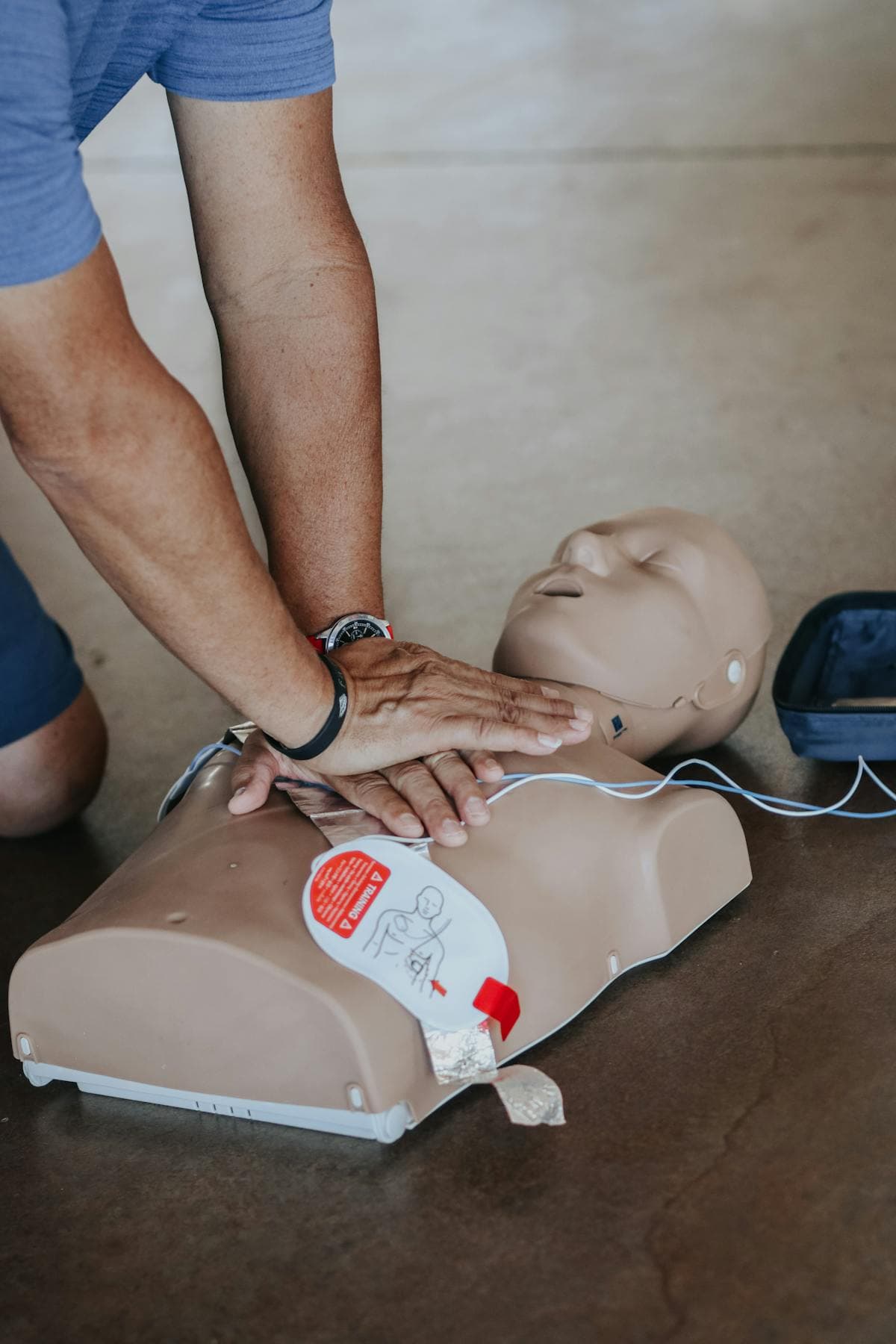
Heart attack. Cardiac arrest. CPR. Most people have heard all three terms, and most people use them as if they mean the same thing. They do not. Understanding the difference is not just a matter of vocabulary. It can change how you respond in an emergency and whether the person next to you survives.
What Is a Heart Attack?
A heart attack is a circulation problem. It happens when a blocked artery prevents blood from reaching a section of the heart muscle. The heart is still beating, but part of it is being starved of oxygen.
A person having a heart attack is usually conscious. They might complain of chest pain or pressure, shortness of breath, nausea, or pain radiating into the arm, jaw, or back. Symptoms can come on suddenly or build gradually over hours.
The right response is to call 911 immediately, have the person sit or lie down in a comfortable position, and give them an aspirin if they are not allergic. Do not wait to see if the symptoms go away.
What Is Cardiac Arrest?
Cardiac arrest is an electrical problem. The heart's electrical system malfunctions, causing it to stop beating effectively. Blood stops flowing to the brain and other organs. The person collapses, becomes unresponsive, and stops breathing normally.
Cardiac arrest is immediately life-threatening. Without intervention, death can occur within minutes. A heart attack can sometimes lead to cardiac arrest, but they are not the same event.
When Is CPR Needed?
CPR is needed during cardiac arrest, not during a heart attack. If someone is unresponsive and not breathing normally, that is your signal to act. Call 911, start chest compressions, and use an AED if one is available.
CPR keeps blood flowing to the brain and vital organs until the heart can be restarted, usually with a defibrillator. It is a bridge that buys time, and it is remarkably effective when started quickly.
During a heart attack, the person is still conscious and their heart is still beating. CPR is not appropriate in that situation. Focus on keeping them calm, calling for help, and monitoring their condition in case it worsens.
What to Do for Each
- Heart attack: Call 911. Keep the person calm and comfortable. Offer aspirin if appropriate. Monitor them closely.
- Cardiac arrest: Call 911. Begin CPR immediately with hard, fast chest compressions. Use an AED as soon as one is available. Do not stop until help arrives.
Quick Reference Summary
Think of it this way: a heart attack is like a plumbing problem where a pipe is clogged. Cardiac arrest is like the power going out entirely. Both are serious, but they require different responses. CPR is the tool you use when the power goes out, keeping things running until the electrician, or in this case the paramedics, can restore the rhythm.
Knowing the difference means you can stay calm, act with confidence, and give the person next to you the best possible chance.